
The far distant present
Everything will reappear as simulation unless we recover a sense of proportion

In his fascinating reverie on America (1986), Jean Baudrillard makes this startling claim that “everything is destined to reappear as simulation.” It is as if, at the end of an imaginary sequel to Collodi’s famous fable, the real boy Pinocchio will thank his lucky stars that he has, at long last, been turned back into a puppet. Baudrillard goes on with some examples of how simulations will dominate perception:
Landscapes as photography, women as the sexual scenario, thoughts as writing, terrorism as fashion and the media, events as television. Things seem only to exist by virtue of this strange destiny. You wonder whether the world itself isn’t just here to serve as advertising copy in some other world. When the only physical beauty is created by plastic surgery, the only urban beauty by landscape surgery, the only opinion by opinion poll surgery and now, with genetic engineering, along comes plastic surgery for the whole human species.
Is everything really destined to reappear as a simulation? It is worth taking a moment to listen to this atonal Baudrillardian music, albeit transposed into the key of metaphysical realism. This is part of what I want to do here while building towards briefly suggesting how this “strange destiny” is not so inevitable after all and can in fact be overcome.
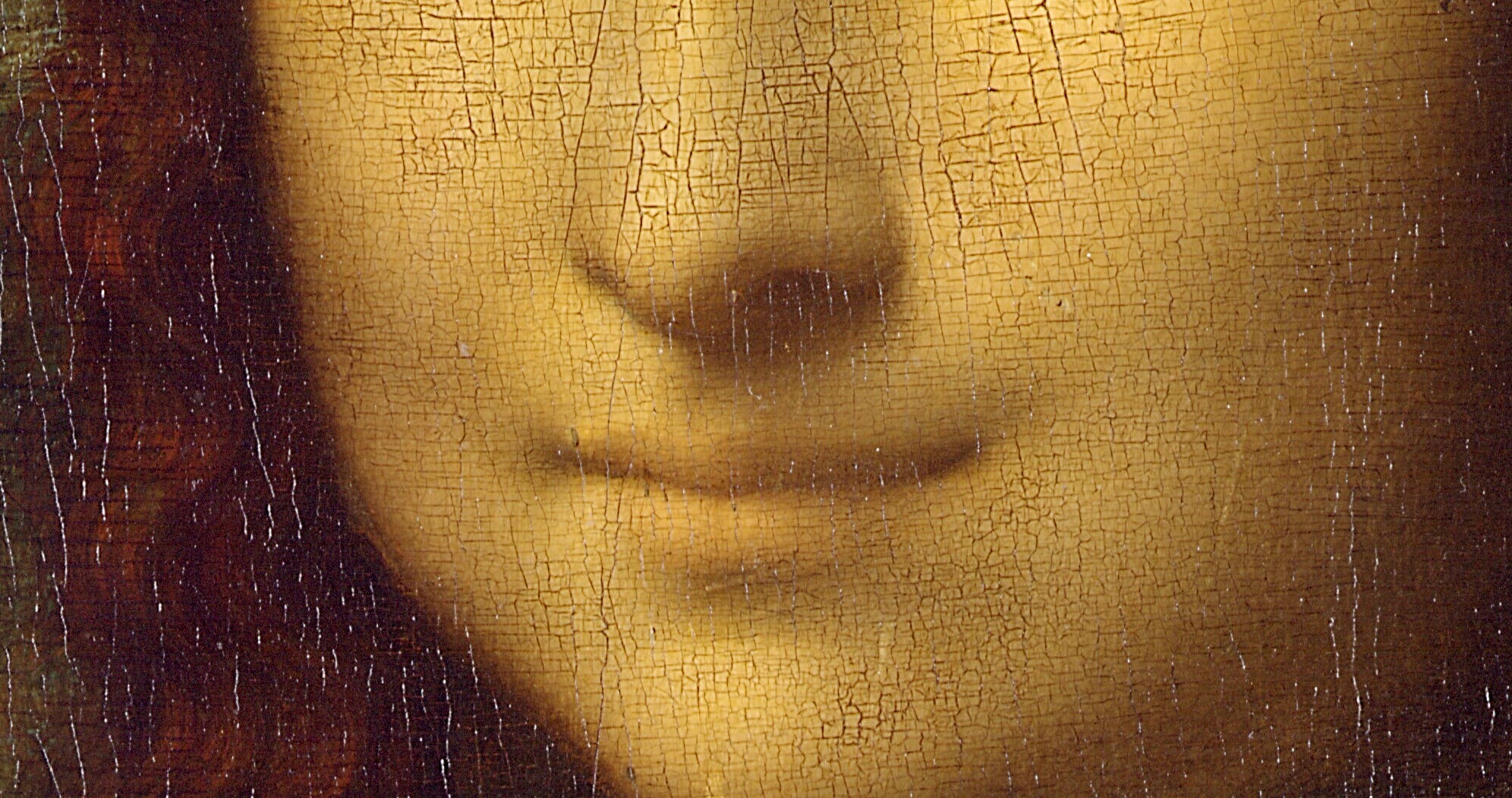
When thinking about things reappearing as simulations we might assume that reality comes first. Logically and chronologically speaking, this is right. The disappearance of reality precedes the arrival of artificiality, just as the disappearance of sacramentality precedes the arrival of nominalist fantasies. First, for example, is Lisa Gherardini, the noble wife of Francesco del Giocondo. A great Renaissance artist is commissioned to paint her portrait. He sees her gentle smile and tries to capture some sense of it. A few brushstrokes later, the result is a marvel: the Mona Lisa. Now, a few catastrophes and technological revolutions later, we have an obscene number of replications of the image of that painting. We went from reality to an artistic representation to absolute artificiality. That was the order of things.
But logic and chronology are not what Baudrillard has in mind. That everything will reappear as simulation means a reversal of this logic and this chronology. Substitutes and fakes, which do not necessarily even refer to real things, typically precede our encounters with real things. Now we live with a precession of simulacra. Representation even determines our attitudes and expectations such that the question of what is really real may become irrelevant to us. Representation filters the meaning of the real in a very particular way, warping and distorting how we perceive things. As a consequence, there is now often no clear distinction between reality and its representation. Reality can be lost to us like some sunken Atlantis, appearing only as a myth or a legend.
How many people have seen the Mona Lisa before seeing her image in a book or on a postcard or online? Hold that thought. How many people have actually seen the Mona Lisa at all? Most of us won’t ever know the real thing. We have only signs and symbols of the real thing. As Robert Hughes suggests in his provocative and still entertaining documentary The Mona Lisa Curse (2008), sheer familiarity has robbed the original painting, and perhaps even art, of meaning. Art gets celebrified and so reimagined by manufactured collectivity and manufactured consent. Over-familiarity breeds unfamiliarity and unfamiliarity breeds something worse than contempt, namely indifference.
What does it mean when ordinary human experiences reappear as simulations? Let’s say—not too hypothetically, unfortunately—that a vast online corporation has plans to turn your dead relative’s voice into the voice of its artificial intelligence. Soon you’ll be able to hear your dead grandfather say things he never would have said when he was alive. He’ll relay factoids taken from the internet. He’ll tell you how the prices of products compare. He’ll give you directions to places he would never have gone to himself. Perhaps some vaguely good motivation sparked this idea to make his voice speak so out of character and out of time. But we know from experience that every tool has unintended consequences. Reviving your memory of your grandfather using coding and electricity is likely to end up slowly eating away at your memory of him. If before reality could take priority, the simulation flips the order of things.1
Here’s another example of the reappearance of being as a simulation that my friend Sam Buntz pointed out recently. When you look at a supermarket refrigerator with the intention of buying yourself something to drink—or stealing it, perhaps (I don’t want to be presumptuous)—you may not get to see what you’re looking for through a glass door anymore. Large screens have been introduced in some stores to replace what was once transparent glass. Is it the destiny of all windows to be replaced by screens? Is it the destiny of real shops to become simulations of online stores? It is the destiny of the depth of being to be turned into a mere surface of lurid illuminated pixels?
When you stand in front of that door-screen, it displays what you can buy. But often the screen lies. It’ll show you products that are not there when you open the fridge. Digital presence is answered with an ontological absence. Then, to make matters worse, some of those screens replace any sense of what’s inside the fridge with a large brand logo or advertisement. In truth, if you change the form, the function inevitably changes as well. Both buyers and products are not the same as they once were. While one can hope that such intrusions into common experience might wake us up to the strangeness of the familiar, my sense is that they tend instead to distance us from our intimate environments. However, the overreach of simulations in our time does not only happen thanks to digital media. In fact, the very system of commerce that sees drinks largely as products to be purchased at supermarkets is arguably already a simulation of a kind. Drinks have become simulations and money has become a simulacrum. But I’ll look at another issue to unpack something of this more concrete dimension of the transformation of the real into a simulation. It demonstrates the corruption of ethics itself. I’m attending here, for now, to the reversal of logic and chronology into irrational dyssynchrony.
During recent protests resulting from the collapse of Roe v. Wade, one mother paraded the streets with her two small children next to her and a sign reading, “Don’t force this [i.e. motherhood] on anyone.” Along similar lines, an obviously pregnant mother-to-be paraded the streets with a crudely written slogan on her bare stomach that declared the fruit of her womb not human. Around the same issue, a very liberal mother noted on Twitter how proud she was that her 13-year-old son was so eager to get a vasectomy while encouraging his friends to do the same now that infanticide is no longer convenient in some American states. She was effectively proud of her son’s eagerness to castrate himself. Around the same issue, American corporations everywhere, apparently oblivious to just how dystopian they were sounding, told their female employees that they shouldn’t worry if they get pregnant; the companies themselves would pay for them to be flown to states where abortions remain legal.
In all of the above cases, a legal fiction (for that is all abortion laws can ever be) has transformed the reality of a precious human life into an inconvenience like a flat tire or a bad internet connection. This is part of a larger trend that renders life subject to legal processes and medical procedures, fitting well with the general atmosphere of progressive capitalism. Progressive capitalism holds essentially that the best consumer and the perfect subject of the system is the totally unworlded subject—someone without any ties to family, kids, parents, faith, or country. The market, that servant of the death drive, wants us alienated from life itself. But why? Well, because that’s what will make us better consumers. Market liberalism and progressivism are bedfellows. As Paul Kingsnorth put it so aptly in a recent article for Unherd: “The Left and corporate capitalism now function like a pincer: one attacks the culture, deconstructing everything from history to ‘heteronormativity’ to national identities; the other moves in to monetise the resulting fragments.”
This suggests a further nuance to the idea of how things become simulations; everything will be deconstructed to become a consumer item. At an existential level, this suggests a deforming not primarily of our abstract concepts, although these are no doubt deformed eventually, but of our whole engagement with the world. At one level it may seem that the problem is with mediation itself. This would imply that what we really need in order to counteract all this fakery is to drink reality neat, without the dilution of any mediation. However, mediation cannot be avoided. Mediation itself is not the problem. What can and should be avoided is any remodelling of the world to comply entirely with the image created by mediations of an especially inhuman scale, out of proportion with any possibility of human flourishing.
The fundamental issue that we have to concern ourselves with is the fact that a very worrisome form of mediation has come to act as a substitute for more wholesome mediations. Many consequences follow from this but I want to focus here on just three. First, this twisted form of mediation has come to be viewed as immediately true, as if it is not mediation at all. Second, this form of mediation inverts our sense of nearness and distance, such that our intimacies are rendered remote while what is remote, and arguably ought to remain remote, is rendered intimate. Third, this form of mediation distorts any proportional sense of the value of things, with the significant consequence in the realm of ethics that rights become divorced from obligations.
Regarding the first consequence, namely the unquestionability of this form of simulacral mediation, we find that more balanced ways of attending to the world start to appear odd and even quaint. One of the chief targets of the negative spirit of our time is any form of so-called normativity. The exception becomes viewed not as proof of the rule but as the new rule. A paradoxical situation occurs in which no norm is allowed even while the abnormal becomes the new normal. The state of exception is no longer exceptional. We have seen this most evidenced in identity politics and co(vi)dified politics. The fringe concern, the margin, starts to dictate to the centre what is important. This is an echo of the ancient notion of idolatry.
As this shows, simulations confuse our relationship with nearness and distance. The technological mediation of the world, especially via the devil’s electric nervous system, encourages us to regard what is close with a sort of detached indifference. What is far from us becomes the main thing—the Current Thing. In a 1926 essay, G. K. Chesterton noted that through sheer speed and distance, mass communications erase any sense of the local. Local traditions, for example, get obsolesced by international fashions. And when the international fashion has changed, it is not that the local tradition can then return. The damage is not so easily reversed. Our communications
… are cosmopolitan communications wherever they come from and wherever they go to; and the problem of the moment is that they go everywhere. Wherever they go they are at once mischievous and monotonous. They not only do harm everywhere, but they do the same harm everywhere. Unless local liberty and experience and instinct and invention can again be given a chance, the whole life of the world will be withered. It is not only a question of superior things being defeated by inferior things. It is a question of a hundred things that are superior being defeated by one that is inferior.2
Perception deadens thanks to one thing: the simulation. The chief way this happens is through enforcing a kind of ‘revaluation of values,’ which always means a weakening and a distortion of the natural law, as C. S. Lewis notes in his Abolition of Man (1943). The nearest things, like our very real communion with family and friends, soon become less important than things far away, often mediated through mass media and bureaucracies of all kinds. This is the third and final aspect I want to briefly reflect on here with regard to the reappearance of things as simulation. Again, the precession of simulacra implies that any proportional sense of the value of things is bent out of shape. Experience gets dictated to as a result, whether subtly by implication or blatantly by instruction. A consequence of this in the moral sphere, as I have already mentioned, is that rights get separated from obligations. The ontological priority of obligations over rights is subverted. The result is that rights themselves become arbitrary. They become signs of a mere will to power and nothing else, and so inevitably become parodies of the ethical. This is akin to showing someone an image on a fridge of a product that the fridge does not contain. Semiotic presence (rights) is an indication of an ontological absence (obligations). Without obligations, rights are mere restatements of selfish desires, and not a reflection of the ethical at all.
This is something Simone Weil notes as a component of modernity itself. It is no new thing. In fact, our digital technologies and the anti-reality of various socially acceptable agenda-dysphorias simply highlight what has been endemic in the modern world for a long time. In a metaphysical realist view, the illogicality of the simulation is less a result of some historical process than an aspect of the fall of man, albeit highlighted through certain historical events. It is sin, a misalignment with reality, that causes us to serve ourselves at the expense of others.
Weil rightly notes in her book The Need for Roots (1949) that it is nonsense to consider rights apart from obligations. According to natural law, obligations always come first, and the world will present itself to us as chaos as long as we fail to get this priority right. We need to attend to what Weil calls the “needs of the soul,” which work in antithetical pairs to balance each other out. Such needs include the need for both order and liberty, obedience and responsibility, equality and hierarchism, honour and punishment, private and collective property, risk and security, truth and freedom of opinion. At the heart of this is duty (or engagement), which always goes both ways. All obligations are, in fact, mutual obligations. All ethics is reciprocal.
By implication, it is possible to get our priorities right. It is possible to subvert that “strange destiny” that Baudrillard observes. Not everything has to be destined to become a simulation. Its true destiny is to become real—like Pinocchio in Collodi’s story. The crucial two-fold tool for subverting the false destiny of simulation has to do with becoming aware of how ordinary things may have been distorted by false universals created by mass media, as well as attending to things in their right proportions and according to the right relations. This amounts, often, to zagging when everyone else is zigging. It has to do with being the cognitive minority you want to see in the world, against the mainstream of compliance to so many distortions.
Only a living thing can move against the tide, after all, while dead things can only move with it. More specifically, we need to attend to slowness against the unbridled momentum of speed, and we need to attend to nearness over against the gravitational pull of the distant. We have to recover the conscious ethical priority of lingering over and against the unconscious habit of hyperlinking. We have to recover smallness—a genuinely human scale that is in keeping with our embodied life. It is not inevitable that our perceptions will be hijacked by simulations. But their hijacking is fairly certain when the love of the neighbour who is right here next to us gets replaced by some vague love of humanity, especially as defined by the Current Thing. The very last thing we need is for the love of the neighbour to become yet another simulation.
A brief aside on the use of the voices of our deceased loved ones in AI engines: The possibility of such a disturbing simulation, disturbing because of its uncanny and perhaps even undetectable similarity to someone you love, is precisely what is symbolised by the surge in zombie stories in our time. I think of many zombie films and series and novels—Bennet Sims’s A Questionable Shape (2013) is the most philosophically rewarding of the lot. Many of these stories grapple with what it means to resurrect the dead against their will and against the entire ethos they stood for. A zombie, an empty shell of a human being, is precisely being-as-mere-representation. A zombie is AI in a symbolic form. It even eats brains. Everything becomes a mere representation—and by being a mere representation its horror is shown. There is nothing behind or inside the text. Everything turns into a mere image in the mind divorced from its being in the world. The zombie turns others into zombies because zombification is viral and mimetic. Machines turn people into machines because of a similar virality and mimesis.
A brief aside on the removal of nearness to locality and nature: I have wondered in recent days if it is possible for a person to experience natural law when they have never even experienced nature. What Joseph Keegin brilliantly suggested in a tweet reply to me the other day might be called “virtual law” is fairly inevitable in such a world, where a basic attunement to reality in its natural state becomes difficult. Virtual law implies virtuality in various ways: something almost there but not quite there, something vaguely related to a desire for virtue or the good but ending up manifesting only the virtue signal and the substitute good, something composed of displacements and obsessed with appearances at the expense of often more significant disappearances. When ethics reappears in its simulated form, natural law becomes virtual (perhaps even viral) law.